
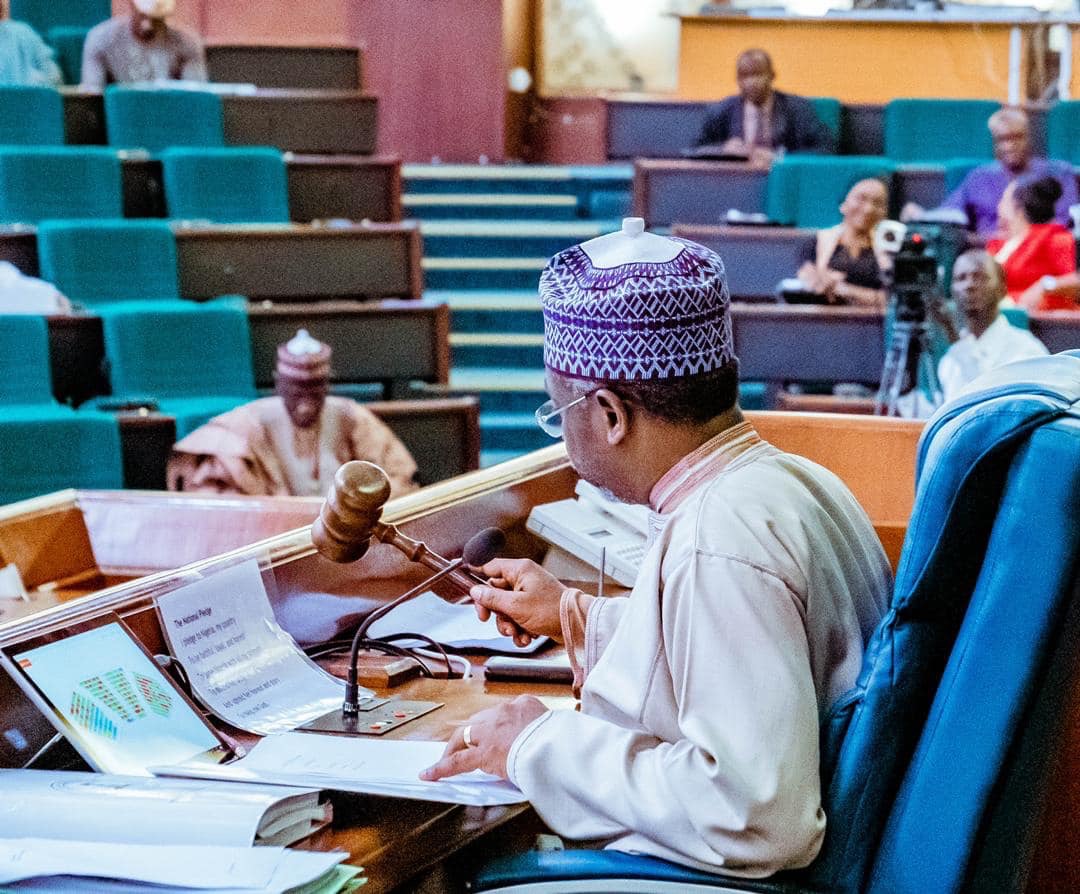
SPECIAL PLENARY SESSION OF THE HOUSE TO CONSIDER THE MATTER OF NIGERIA’S MILLIONS OF OUT OF SCHOOL CHILDREN
REMARKS BY THE SPEAKER OF THE HOUSE OF REPRESENTATIVES, REP. FEMI GBAJABIAMILA AT THE SPECIAL PLENARY SESSION OF THE HOUSE TO CONSIDER THE MATTER OF NIGERIA’S MILLIONS OF OUT OF SCHOOL CHILDREN.
Protocols:
Good morning honourable colleagues. I welcome you all to this special plenary session of the House of Representatives, and I thank you for being here this morning.
We have come here today to consider the matter of the millions of children in our country who are out of school, and who as a result are denied their fundamental right to receive the training and skills acquisition opportunities that will allow them to have better lives than their parents before them, and provide a better future for their offspring.
We are here to consider the failures of policy development and implementation, the vagaries of culture and religion that have contributed to the plight of these young people. We are here to advance solutions to this problem.
We are here to act in the best interests of our people by ensuring that the solutions presented here today are formulated into actionable policy plans to be implemented diligently, with haste. This is a commitment that we made in our Legislative Agenda, and we will live up to this and all other commitments which we have freely made before God and the Nigerian people who have chosen us to represent them here in this hallowed chamber.
Over the last twenty years, the government of the Federal Republic of Nigeria has committed to a programme of educational reform that has resulted in the allocation of significant sums of money to fund basic education access in our country. These reforms have been intended mostly to address the availability gap by building new schools and providing teachers in previously underserved areas.
These investments have not yielded the desired outcomes.
In too many parts of the country, the school attendance rates have not improved, and the quality of education being received by those who enrol and attend still falls far short of our most fundamental expectations. We must consider that perhaps the time for a massive course correction has come.
That process of course correction must begin first with a critical assessment of everything we have done so far, so that we can objectively determine for ourselves what works and what doesn’t, what can be learned from reform efforts and what is necessary to ensure that no Nigerian child, born in this age will ever be denied the benefits of an empowering education.
Let no one be left in any doubt, we will not eradicate poverty from our land or meet the challenges of insecurity, we cannot defeat ignorance and strife or attract foreign investment in significant numbers to make a substantial economic difference until we have ensured for all our people access to a modern education that empowers them to participate fully in the 21st-century knowledge economy.
We have spent the past two decades building schools. It has not been enough. Now is the time to lift our ambitions to the consideration of bigger things and begin to build capacity for the future survival of our nation. The complex interconnectivity of modern life means that we cannot be satisfied with merely shoving more children into failing and failed school systems just so we can maintain the appearance of education access. We must aim for better.
An enlightened education gives hope and the confidence that through the studied application of the human mind and human ability, individuals can remake their existence and make their world better.
Education excellence calls for ongoing curriculum reform, and a broad embrace of technology in our schools. At the earliest possible stage of their education, we must begin to equip our young people with the skills they need to thrive in this technocentric new world.
It is not enough to build schools if we cannot also provide properly trained, suitably remunerated and passionately motivated teachers. We have a crisis of not enough teachers across the country today, a crisis so severe, that many of the schools we have built are at risk of becoming empty monuments. This crisis requires of us that we embrace unorthodox thinking and options we never considered before.
It is in that spirit, that I will seek legislation to amend the National Youth Service Act to allow the corps to establish a “Teaching for Nigeria” pathway which will allow for the identification, recruitment and deployment of willing, capable and promising young Nigerians to serve as teachers in underserved areas during their service year and for a number of years after, in exchange for a Federal Government commitment to fund their post-graduate education in addition to whatever allowances they might receive during their deployment.
Education excellence also calls for administrative accountability and a fair admissions process across the board. We cannot continue to relegate huge swathes of our national population to second class citizenship through the operation of an affirmative action system that is rooted in outdated ideas about our nationhood.
Lifting our ambitions to the consideration of bigger things requires of us that we commit ourselves to a determined and sustained effort to confront the cultural and religious beliefs and practices that influence decisions about education.
A child’s gender should never determine whether they get an education or not. This should no longer be a controversial position to take. Our constitution guarantees all our children a right to basic education. We must now act to live up to that obligation. All our nation’s children are God’s children and we owe to each of them the same responsibilities regardless of their gender, the location or circumstances of their birth.
If we do nothing else today, let us all take advantage of this special session to tell ourselves the reality, so that we may liberate ourselves from the shackles of limited thought and through our collective efforts, achieve the vision of a nation where no child is left behind, where no child is forgotten and all God’s children have the opportunity to fulfil the highest achievements of which they are inherently capable. That is the challenge. We intend to meet it.
Shortly, we will view a documentary on our nation’s millions of out of school children. This is intended to serve as a visual and shocking reminder of why we are gathered here today. Afterwards, I will invite Hon. Wunmi Ogunlola, who will act on my behalf to bring a motion under the purview of Order 8 Rule 4, matters of urgent public importance so that the House may commence debate on the subject matter, and take other actions as it may deem fit.
Honourable colleagues, this is the time for truth-telling but it is not an occasion for finger-pointing. This is not an arena for trafficking in destructive stereotypes or invitation to pander to the base instincts that have too often in the past stood in the way of development and progress in our national life. Truth-telling is an act of love and respect; love of country and respect for one another. Let all the submissions we make today be grounded in these eternal ideals.
I thank you all most graciously for your presence here today. God bless you all. And God bless our Federal Republic of Nigeria.
#NoChildLeftBehind #HORSpecialSession
Related Post


